- Published on
Repairing a Wooden Bench: Joints, Slats and Rotten Feet
- Authors

- Name
- Outdoor Wooden Bench
Most benches at the curb had sound wood. A joint let go, a foot rotted, and nobody looked underneath.
A repair makes sense when the wood around the fault is still solid. That one test decides most of it.
The rest is matching the fix to the failure. A wobble, a split slat and a rotten foot take three different approaches.
None of them takes long. The biggest job here is an afternoon.
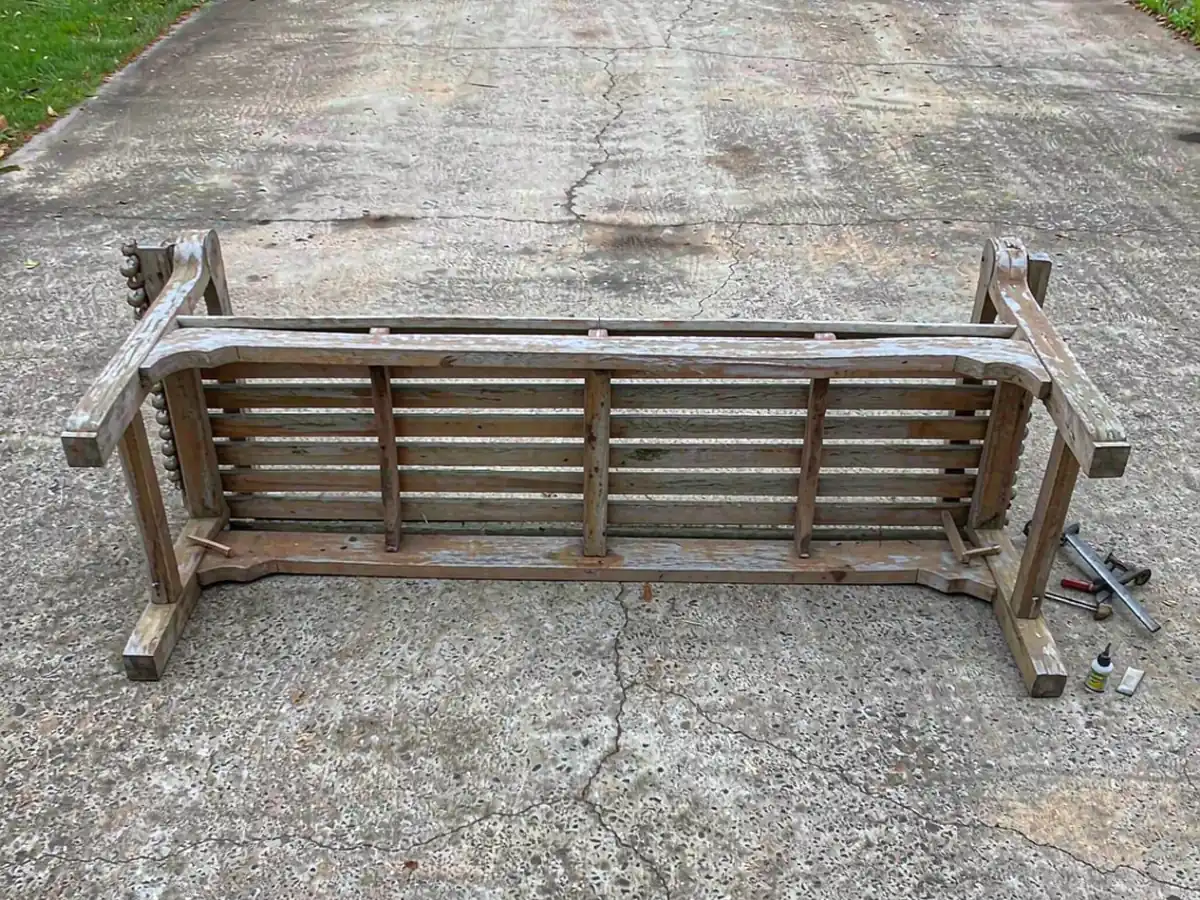
What fails, in order
Benches fail in a predictable order.
Joints go first. Bolts loosen, glue dries out, and the frame starts to rack.
Then the parts that touch the ground. Feet soak up water and rot from the bottom.
Then the slats. The ends go first, where screws sit close to the edge.
| Failure | What you see | The fix | Parts | Time |
|---|---|---|---|---|
| Loose bolt | Wobble and a creak | Tighten, add washers | Under $5 | 10 minutes |
| Stripped screw | Screw spins, slat lifts | Glue in a dowel, redrill | Under $5 | 20 minutes |
| Open joint | Gap at the leg | Clean, epoxy, clamp | $10 to $15 | 1 hour plus cure |
| Split slat | Crack from one end | Stop hole, glue, clamp | Under $5 | 30 minutes |
| Rotten foot | Soft, dark, crumbles | Cut back and splice | $10 to $20 | 1 to 2 hours |
| Broken slat | A board missing | Cut and fit a new one | $10 to $20 | 1 hour |
Nothing on that list needs a workshop. A drill, two clamps, a scraper and a tube of glue cover most of it.
Probe the wood first
Before you buy anything, test the wood around the fault.
Push an awl or a small screwdriver into the joint and into the foot. Sound wood resists and the point skips. Soft wood takes the point with no resistance.
Do the same along the underside of the seat, where water sits longest.
If a third of a leg is soft, stop. A splice needs sound wood above it to hold on to.
If the point meets resistance half an inch in, you have something to work with. The care guide covers the rest of the inspection, including what a wobble plus soft feet means.
A wobble: tighten, then brace
A wobble has two causes, and they take different fixes.
Check the hardware first. Most benches rack because four bolts worked loose over a winter. Tighten them and the bench goes still.
Add a flat washer under each nut while you are there. A washer spreads the load and stops the bolt crushing the wood.
If the bolts are tight and the bench still rocks, the frame has lost its square. Sight along the seat from one end and look for a twist.
A diagonal brace across the back fixes most of it. Cut a thin board to fit corner to corner, then screw it to the back legs and the apron.
On a light bench, a corner bracket under the seat does the same job with less fuss.
When the bolts will not budge
A bolt that has sat through ten winters will not turn. Force it and the head shears off, which turns a ten minute job into a drilling job.
Soak it first. Use penetrating oil, not cooking oil, and leave it overnight. Most frozen bolts come free after that.
If it still resists, add a little heat. A heat gun on the nut for a minute expands it away from the bolt. Keep the flame off dry wood, and that is why a heat gun beats a torch here.
An impact driver beats a hand wrench on rusted hardware. Work in short bursts, not one long pull.
If the head rounds off, stop and drill it out. Center punch first, then a pilot hole, then a bit just under the bolt diameter.
Stripped screws
A screw that spins has lost its grip, not its thread.
The wood around it has opened up. Driving it again makes a bigger hole.
Same hole, new grip. Dip a hardwood dowel in glue and tap it in. Let it set, drill a pilot hole, then drive the screw again.
Matchsticks. Pack the hole with glued matchsticks or toothpicks in a pinch. It works. It lasts a few seasons.
Through-bolt. Where the joint carries load, drill right through and fit a quarter-inch carriage bolt with a washer at each end.
Drill a pilot hole every time. A screw driven into hardwood without one splits the slat.
Loose joints
An open joint is the most common failure on a wooden bench, and the easiest one to fix badly.
Old glue is the reason. Yellow wood glue will not stick to a dried glue film. Squeeze more into a joint full of old glue and it fails again by winter.
Clean it out first. A thin blade, sandpaper wrapped on a stick and warm water take most of it.
Then reach for epoxy rather than wood glue. Epoxy fills the gap, bonds to old glue and does not creep under load.
Warm the joint, mix the epoxy, work it in with a thin stick, then clamp. Wipe the squeeze-out before it sets.
Leave the clamp on overnight. Epoxy holds in a few hours and keeps curing for a day.
Split slats
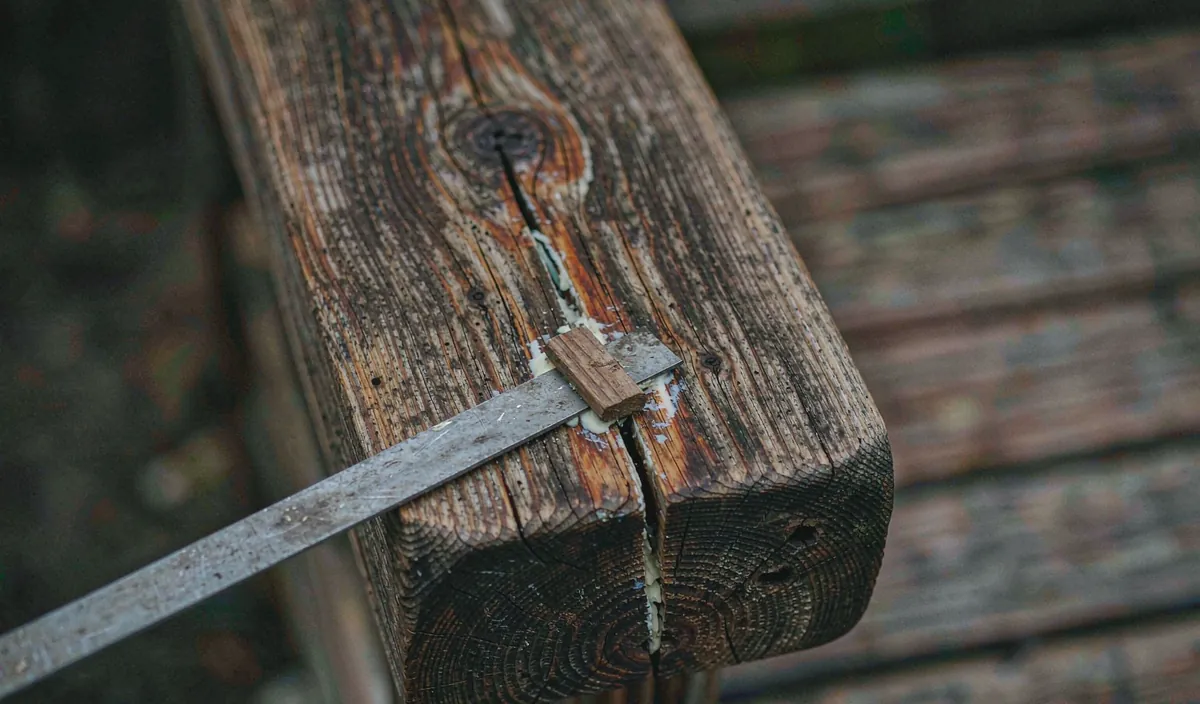
Wood splits along the grain, and it usually starts at a screw hole near an end.
Stop the crack before you glue it. Drill a small hole, about an eighth of an inch, right at the tip of the crack. That spreads the stress and stops it travelling.
Open the crack a little, work glue into it, then clamp across the width.
Put a scrap of wood under the clamp jaws. Metal jaws dent soft wood and leave marks you cannot sand out.
Wipe the glue line with a damp rag. Dried glue blocks the finish and shows under paint.
If the crack runs more than halfway through the slat, replace it. A glued split holds for a while and never recovers its full strength.
Rotten feet
Rot starts at the bottom and works up. By the time you see it, the inside of the foot is hollow.
Cut back to sound wood. Saw across the leg a few inches above the soft part, and check what remains.
If it is, splice on a new piece. Cut both ends square and join them with dowels and waterproof glue rather than a plain butt joint.
A scarf joint is stronger and harder to cut. On a painted bench, a straight splice with two dowels and two stainless screws does the job.
Metal post shoes are the other route. They bolt to the bottom of the leg and take the ground contact. The wood stays dry and the repair lasts.
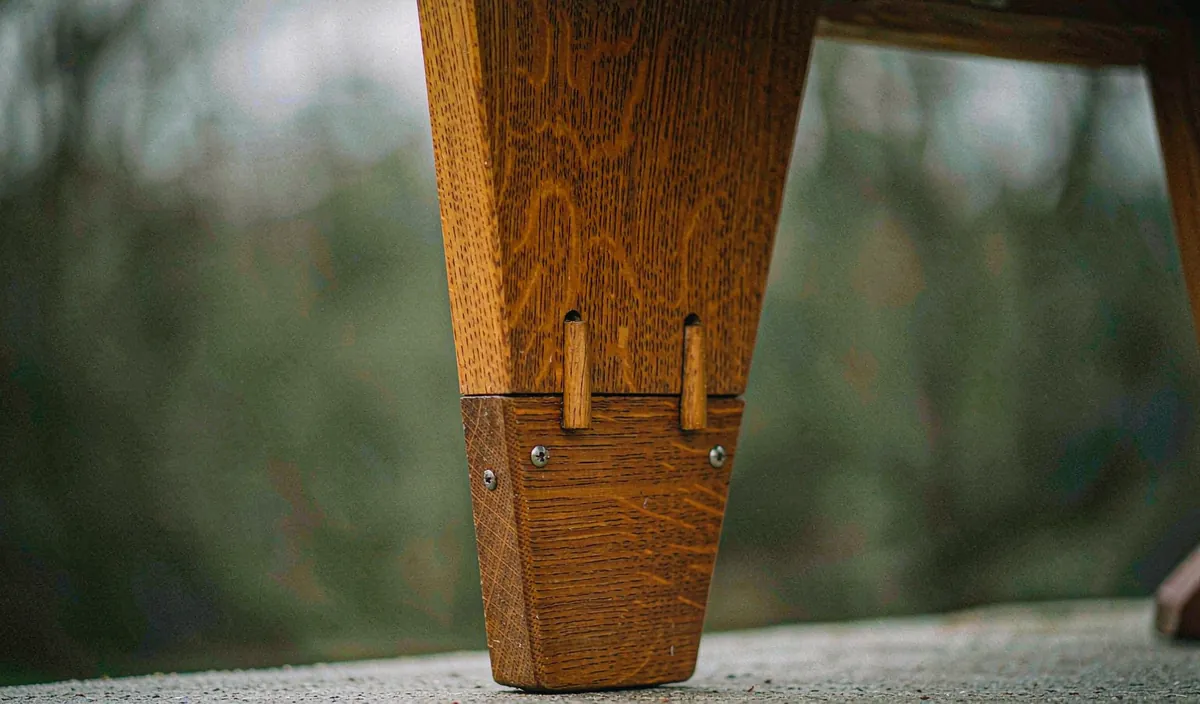
Whichever you pick, seal the end grain. A spliced foot that soaks water rots at the same line in two years. The wood types guide lists which species take a splice well.
Replacing a slat
Slats are easy to replace, and thickness matters more than width.
Measure the old one, then buy stock of the same thickness. A slat sitting a sixteenth proud of its neighbours looks wrong from across the garden.
Width you can rip down. Thickness you cannot.
Cut to length, ease the edges with a sandpaper block, then drill every hole.
Keep the old gaps. A wider gap lets water through and a narrow one traps it.
Finish the new slat before you fit it. The ends are hard to reach once the screws go in.
Splinters and dents
Small damage is worth fixing, because it catches hands and holds water.
A splinter lifts and leaves a hollow. Glue it down, clamp it, then sand the area smooth once the glue sets.
Dents come out with water and heat. Wet the dent, lay a damp cloth over it, and press a hot iron on it for a few seconds. The fibers swell back.
Deep gouges need filler, and filler is cosmetic only. It will not hold a screw or bridge a joint.
On a painted bench, filler disappears under two coats. On bare wood it never matches, so leave the dent or sand the whole slat back.
Hardware
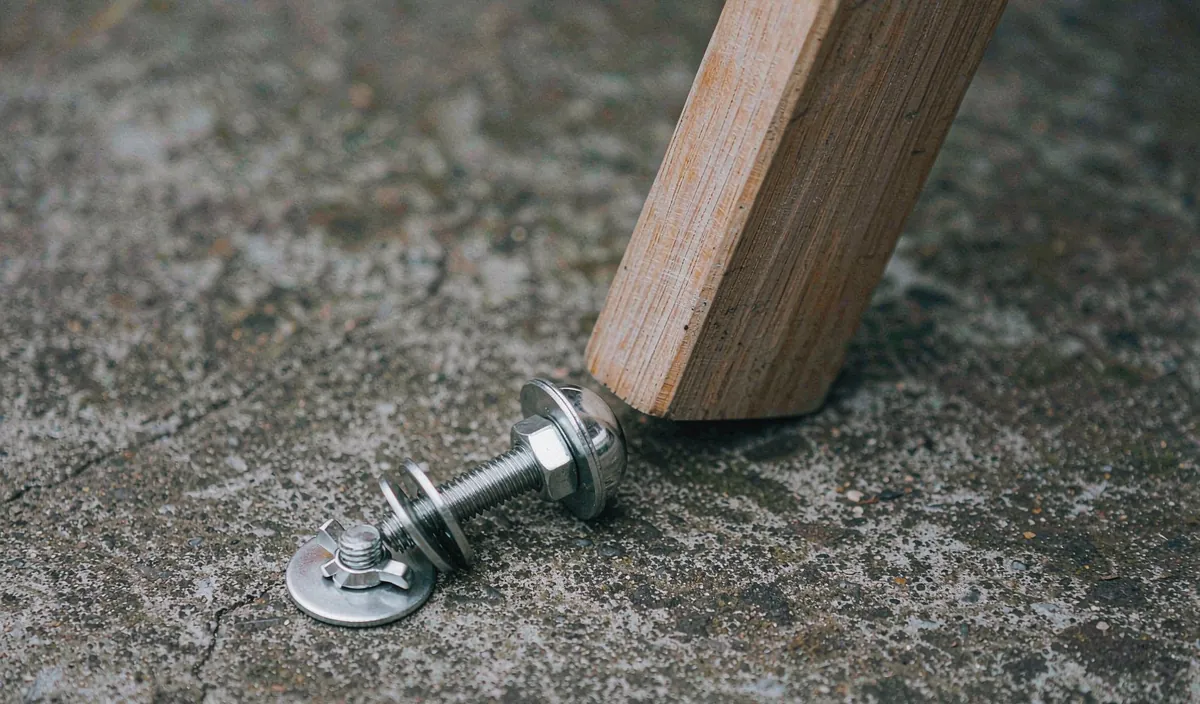
Replace rusted parts with stainless, not galvanized. Galvanized steel rusts outdoors within a couple of seasons and leaves streaks on the wood.
Carriage bolts have a smooth head that will not catch clothing. Use them where a bolt passes through a seat or an arm.
Fit a washer at both ends. Wood compresses under a nut over time, and the joint loosens again without one.
Nyloc nuts stay put on a bench that moves around. A plain nut works loose from vibration and weather.
Check every bolt once a year, in spring. Two minutes with a wrench prevents most of the repairs on this page.
Epoxy, glue and filler
The wrong adhesive wastes an afternoon and fails by winter.
| Product | Fills gaps | Waterproof | Bonds to old glue | Use it for |
|---|---|---|---|---|
| Yellow wood glue | No | No | No | New joints, clean wood |
| Polyurethane glue | Some | Yes | No | Damp wood, outdoor joints |
| Two-part epoxy | Yes | Yes | Yes | Loose joints, rot repair |
| Construction adhesive | Yes | Yes | Some | Slats to rails, not joints |
| Wood filler | Yes | No | No | Cosmetic dents only |
Yellow wood glue makes the strongest bond on clean dry wood and the wrong choice everywhere else.
Polyurethane glue foams as it cures. That fills small gaps and makes a mess, and it wants damp wood to work.
Two-part epoxy is the repair adhesive. It fills gaps, holds on old glue and tolerates damp.
Filler is for looks. It has almost no strength.
What not to fix
Some failures are not worth the time.
Composite and particle board benches have no joint worth repairing. The material crumbles when a fastener pulls out, and glue has nothing to grip.
Severe rot is the other one. If the soft area covers most of a leg, stop. You have nothing sound to splice onto.
Cast iron ends crack, and a shed is no place to weld them. A replacement end often costs less than the welding.
And a bench with three failing joints usually has a fourth. Add up the work before you start the first one.
Protect the repair
A repair that stays dry lasts. One that soaks fails at the same seam.
Seal the new wood before it goes back together. Oil on bare wood, primer on anything you plan to paint.
Coat the end grain twice. It drinks more than a flat face, and it is where water gets in.
If the bench had a finish, redo it over the repair. A patch of bare wood beside an oiled surface pulls water in and shows a line within a month. The painting guide covers the repaint step by step.
Then get the bench off wet ground. A repaired foot standing in soil rots again, whatever you sealed it with. The cover guide sorts which covers keep rain off without trapping damp.
Common questions
Can I fix a wobbly bench?
Nearly always. Tighten the bolts first, then check whether all four feet touch the ground.
What is the best glue for a bench joint?
Two-part epoxy. It fills gaps, sticks to old glue and holds up outdoors.
Can I repair a rotten leg?
Yes, if sound wood remains above the rot. Cut back and splice, or fit a metal post shoe.
How do I fix a screw that will not tighten?
Glue a hardwood dowel into the hole, let it set, then drill a pilot hole and drive the screw again.
Should I use wood filler on a split?
No. Filler has no strength. Glue and clamp the split, or replace the slat.
Can I stop a crack from spreading?
Drill a small hole at the tip of the crack. It spreads the stress and stops the split travelling.
How long does epoxy take to cure?
It holds in a few hours and reaches full strength overnight. Leave the clamp on until morning.
Is it worth repairing a cheap bench?
Sometimes. Add up the parts and the hours. Two soft legs usually mean replacement is cheaper.
What bolts should I use outdoors?
Stainless carriage bolts, a washer at each end and a nyloc nut.
Can I repair a bench without taking it apart?
For most joints, yes. Work epoxy into the gap and clamp the frame square.
Why does my bench keep coming loose?
Missing washers. A nut bearing straight on wood crushes the fibers and loses tension.
Do I need to refinish after a repair?
Yes. Bare repair wood takes water in, and the finish around it fails at the edge.
The short version
Probe the wood before you buy anything. Sound wood around the fault means the bench is worth fixing.
Tighten and washer the bolts first. Most wobbles end right there.
Clean the old glue out and use epoxy on joints. Stop a split with a small hole, then glue and clamp.
Cut rotten feet back to sound wood and splice. Seal the new end grain twice.
Add up the failures before you start. A bench with three bad joints usually has a fourth.